Press Commissioning
Mechanical, electrical, web-tension, register and color baselines captured before acceptance.
Review scope →Every Gallus service engagement begins with the converter's run profile: substrate, label format, regulatory burden, finishing stack and expected changeover rhythm. The St. Gallen team then turns that context into a precise commissioning path. Press commissioning, anilox lab work, plate imaging checks, operator academy modules, parts logistics and Labelfire onboarding are treated as one engineering record. That matters for premium labels because a beautiful sample is not enough; the production line has to repeat the result on Monday morning, across shifts, with operators who can explain what changed and why.
Explore Service ArchitectureMechanical, electrical, web-tension, register and color baselines captured before acceptance.
Review scope →Cell volume, ink series, white opacity and varnish laydown documented against your substrate.
Book trial →Plate-to-plate registration, dot gain and image carrier assumptions aligned with the press setup.
Send artwork →Shift teams learn make-ready, register recovery, die-cut control and preventive maintenance routines.
Plan cohort →Wear-part lists match run profile, local stocking policy and Heidelberg regional hub capability.
Define SLA →Digital inkjet, flexo white, varnish and finishing stations calibrated as one hybrid workflow.
Map workflow →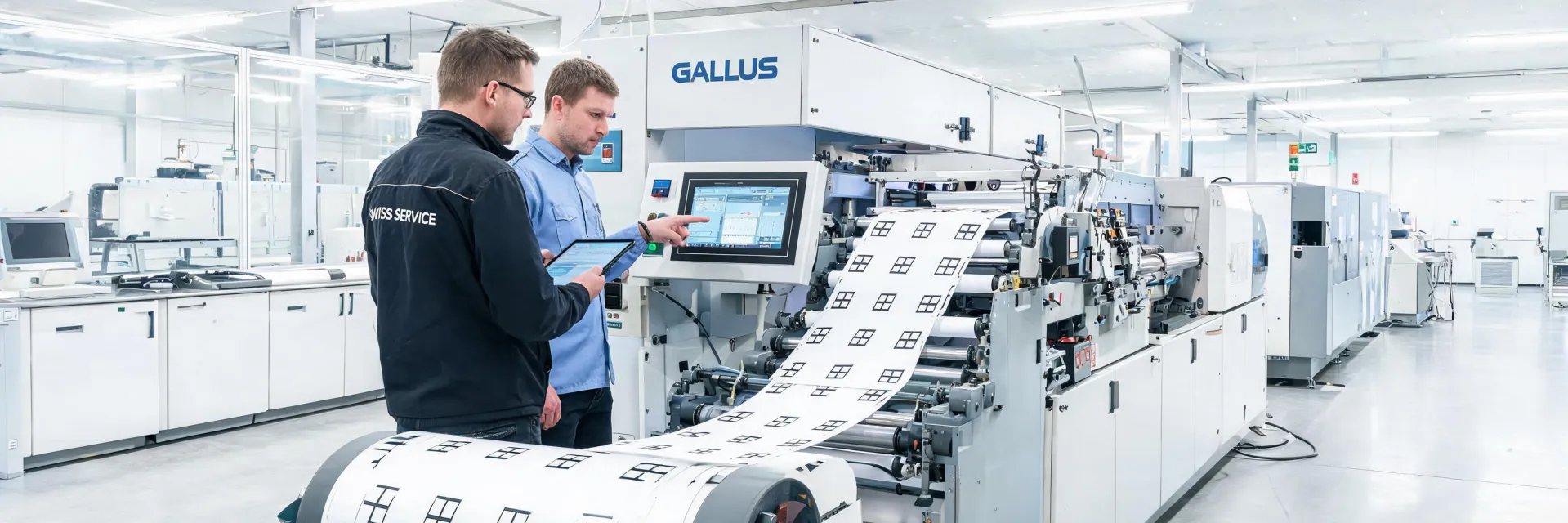
Share the substrate, weekly volume and finishing stack. Gallus will identify the service pillar, documentation depth and field schedule required before production release.